
Guide5 min read
How to check Pokémon card prices (and tell if a card is worth money)
Identify the exact card, find what it actually sells for, and spot the signs of a valuable one. Plus why most cards in a pack are worth less than a dollar.

Guide
New to pull rates? The terms in 30 seconds
- “1 in 92 packs”
- On average, you'd open 92 packs to pull one. It's an average, not a promise: you could hit it in pack 3 or go 300 without one.
- SIR (Special Illustration Rare)
- Full-art cards with special artwork. Usually a set's most valuable pulls.
- IR (Illustration Rare)
- Art cards of single Pokémon. More common than SIRs, and often collected as a set.
- Hyper Rare
- The gold cards. Among the rarest pulls in modern sets.
- Double Rare / Ultra Rare
- The ex and full-art cards that make up most of a set's hits.
- Booster box / ETB
- A booster box has 36 packs. An Elite Trainer Box (ETB) has 9, plus sleeves and accessories.
On this page
Checking a Pokémon card’s price takes three steps: identify the exact card, look up what that version recently sold for, and adjust for its condition. The fastest way to tell whether a card is worth anything is its rarity symbol. Most cards in a pack are worth very little; the value is concentrated in a small number of rare cards.
Key takeaways
- Identify the exact version: set, collector number, rarity, and finish (holo, reverse holo, 1st Edition). Two cards with the same Pokémon can differ in price by hundreds of dollars.
- Use sold prices, not asking prices. TCGplayer’s market price and eBay’s sold listings show what buyers actually paid.
- In the sets we track, 68% of cards sell for under $1, and only 7% sell for $20 or more.
- Signs of a valuable card: a high rarity (Special Illustration Rare, gold, alt art), a popular Pokémon, a vintage 1st Edition or shadowless print, or a known error.
- The market price isn’t what you’ll pocket. Selling fees and shipping take a real cut, especially on cheap cards.
Step 1: Identify the exact card#
Look at the bottom of the card. You’ll find:
- The collector number, like 199/165. A number higher than the set total (199 of 165) means a “secret” rare, usually one of the most valuable cards in the set.
- The set symbol (or, on newer cards, a set code like “MEW”) that tells you which set it’s from.
- The rarity symbol: a circle is common, a diamond is uncommon, and a star means rare or better. Newer cards use extra marks: two black stars for a Double Rare, one gold star for an Illustration Rare, two gold stars for a Special Illustration Rare, three gold stars for a Hyper Rare.
Then check the finish. The same card can come as a regular print, a holo, or a reverse holo (where the shine is on the border, not the artwork), and each has its own price. For vintage cards, look for a 1st Edition stamp to the lower left of the artwork.
Step 2: Look up what it sells for#
Use a source that’s based on completed sales:
- TCGplayer shows a market price built from recent sales, for nearly every English card and finish. It’s what our price tracker uses.
- eBay sold listings. Search the card, then filter to “Sold items.” This is the best check for rare, graded or vintage cards, where sales are infrequent.
- PriceCharting collects sales history for raw and graded cards over time.
Avoid judging value from active listings. Anyone can list a card for $500; what matters is what someone paid.
Step 3: Adjust for condition#
Online market prices assume a card is Near Mint: clean surface, sharp corners, no whitening on the edges. Visible wear, creases, scratches or bends can cut the value a lot. Graded cards are priced separately, by grade. A card that would grade a 10 sells for far more than the same card raw, but grading costs money and you can’t pick the grade. Our grading cost guide explains when it pays.
How to tell if a Pokémon card is worth money#
These are the signs that a card is worth looking up carefully:
- High rarity. Special Illustration Rares, Illustration Rares, Hyper (gold) Rares, alternate art and secret rares carry most of a set’s value.
- A popular Pokémon. Charizard, Pikachu, Umbreon, Mewtwo and the Eeveelutions consistently sell for more than other cards of the same rarity.
- Vintage, early prints. Cards from the original 1999–2003 sets, especially with a 1st Edition stamp or a shadowless print.
- Errors and promos. Known misprints and limited promo cards can be worth far more than the regular version.
And these are the signs it’s probably worth very little: a circle or diamond rarity symbol, a modern non-holo card, or visible damage.
In the sets we track, the gap is stark. 68% of the 5,426 priced cards sell for under a dollar, while just 1% sell for $100 or more. Here are the most valuable cards in those sets right now:
| # | Card | Market price | Odds per pack | Average cost to pull it |
|---|---|---|---|---|
| 1 | 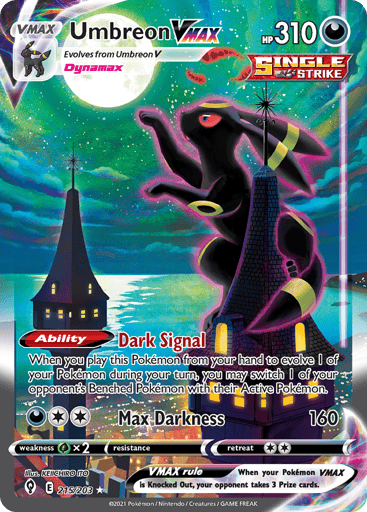 Umbreon VMAXEvolving Skies · #215 · Alternate-art Pokémon VMAX Umbreon VMAXEvolving Skies · #215 · Alternate-art Pokémon VMAX | $2,265 | 1 in 2,000 | $7,980 |
| 2 | 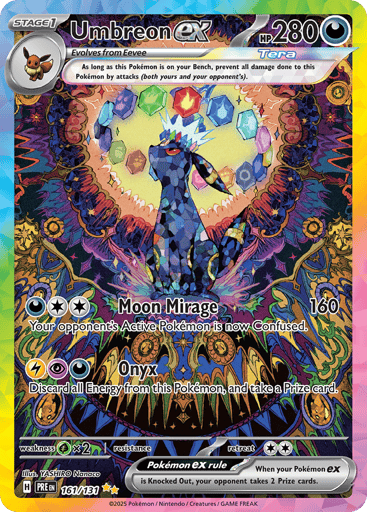 Umbreon exPrismatic Evolutions · #161 · SIR Umbreon exPrismatic Evolutions · #161 · SIR | $1,285 | 1 in 1,441 | $6,470 |
| 3 | 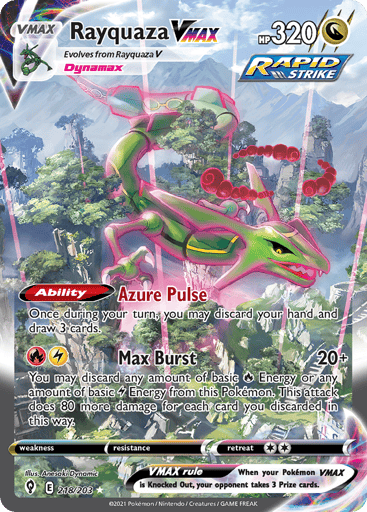 Rayquaza VMAXEvolving Skies · #218 · Alternate-art Pokémon VMAX Rayquaza VMAXEvolving Skies · #218 · Alternate-art Pokémon VMAX | $1,269 | 1 in 2,000 | $7,980 |
| 4 | 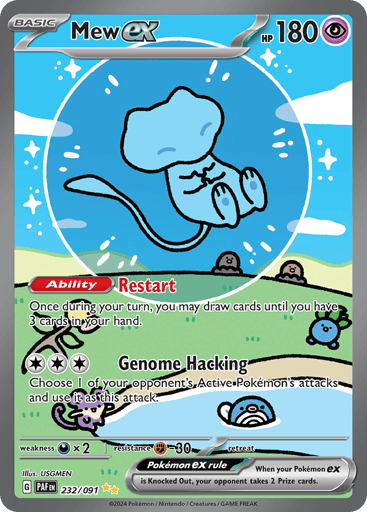 Mew exPaldean Fates · #232 · SIR Mew exPaldean Fates · #232 · SIR | $865.73 | 1 in 465 | $2,088 |
| 5 | 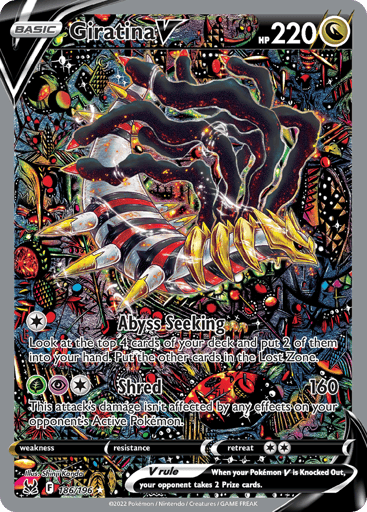 Giratina VLost Origin · #186 · Alt Art Giratina VLost Origin · #186 · Alt Art | $851.13 | 1 in 800 | $3,192 |
| 6 | 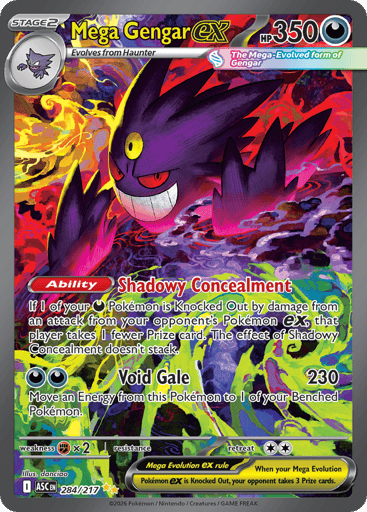 Mega Gengar exAscended Heroes · #284 · SIR Mega Gengar exAscended Heroes · #284 · SIR | $833.70 | 1 in 1,528 | $6,861 |
| 7 | 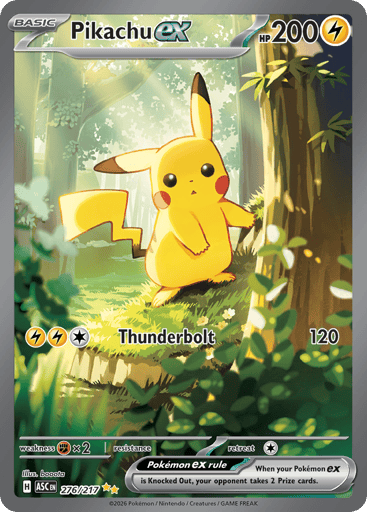 Pikachu exAscended Heroes · #276 · SIR Pikachu exAscended Heroes · #276 · SIR | $798.52 | 1 in 1,528 | $6,861 |
| 8 | 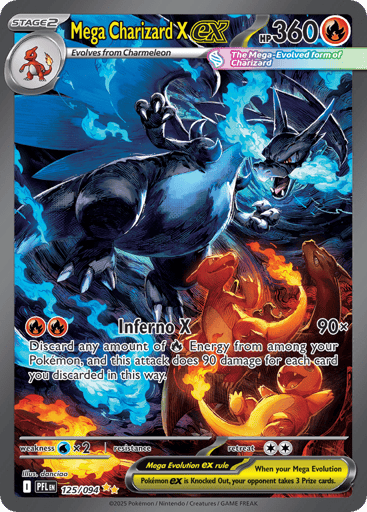 Mega Charizard X exPhantasmal Flames · #125 · SIR Mega Charizard X exPhantasmal Flames · #125 · SIR | $634.87 | 1 in 400 | $1,796 |
| 9 | 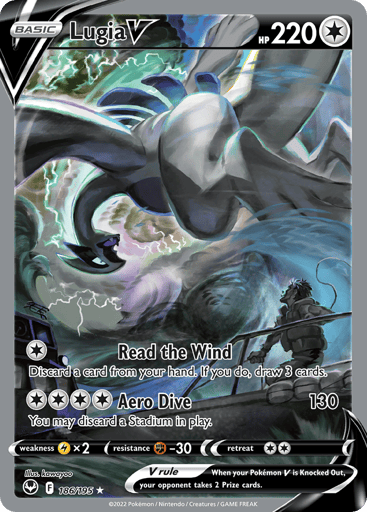 Lugia VSilver Tempest · #186 · Alt Art Lugia VSilver Tempest · #186 · Alt Art | $505.76 | 1 in 667 | $2,661 |
| 10 | 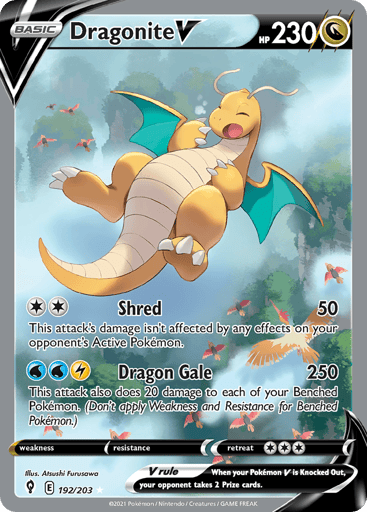 Dragonite VEvolving Skies · #192 · Alt Art Dragonite VEvolving Skies · #192 · Alt Art | $497.16 | 1 in 1,000 | $3,990 |
Ungraded (raw) TCGplayer market prices as of Oct 12, 2026, from the sets we track. Odds assume every card in a rarity is equally likely; cost to pull uses each set's pack MSRP.
For the full list, see our Pokémon card price list.
Are shadowless cards worth more?#
Yes. “Shadowless” refers to an early print run of the original Base Set (1999), where the box around the artwork has no drop shadow on its right side. Base Set came in three main printings:
| Printing | How to spot it | Value |
|---|---|---|
| 1st Edition | “Edition 1” stamp just below the lower-left corner of the art box; no shadow | Highest |
| Shadowless | No stamp; no shadow on the art box | Between the two |
| Unlimited | No stamp; shadow along the right of the art box | Lowest |
A shadowless card is typically worth noticeably more than the same card in its Unlimited printing, and less than 1st Edition. The gap is biggest on the holo rares, Charizard above all, and in high grades. Shadowless only applies to Base Set, so check the set before assuming you’ve found one.
What you’ll actually get if you sell#
A market price is what buyers pay, not what sellers keep. Marketplace fees, payment processing and shipping all come out of the sale. In our own value math, we assume about 13% in seller fees plus $0.30 per card, and treat cards under $1.50 as bulk worth about 5 cents each, because they rarely sell one by one. That’s why a binder full of commons is worth far less than the sum of its listed prices.
Sources#
- Card prices: TCGplayer market prices for the sets we track, from our price tracker.
- Our fee assumptions are described on the methodology page.